Cine film, slides, cassettes: a plain-English guide to what you might find in an old box
You've opened a box of family media and you're not sure what half of it is. This is a quick illustrated glossary.
6 min read
A quick reference guide for anyone opening an old family media box for the first time.
Prints
Any paper photograph. From tiny 2×3-inch matte prints of the 1930s to 10×8 studio portraits, they all count. Look at the back for a developer's stamp — often the best clue to when it was taken.
35mm slides
Small transparent squares in cardboard or plastic mounts, usually 2×2 inches. You hold them up to the light to see the image. Yellow Kodak boxes are the classic giveaway.
Negatives
The reverse-tone strips of film that came back from the chemist with your prints. Colour negs look orange; black-and-white negs look grey. Both are worth keeping — a scan of a negative is usually higher quality than a scan of the print.
VHS
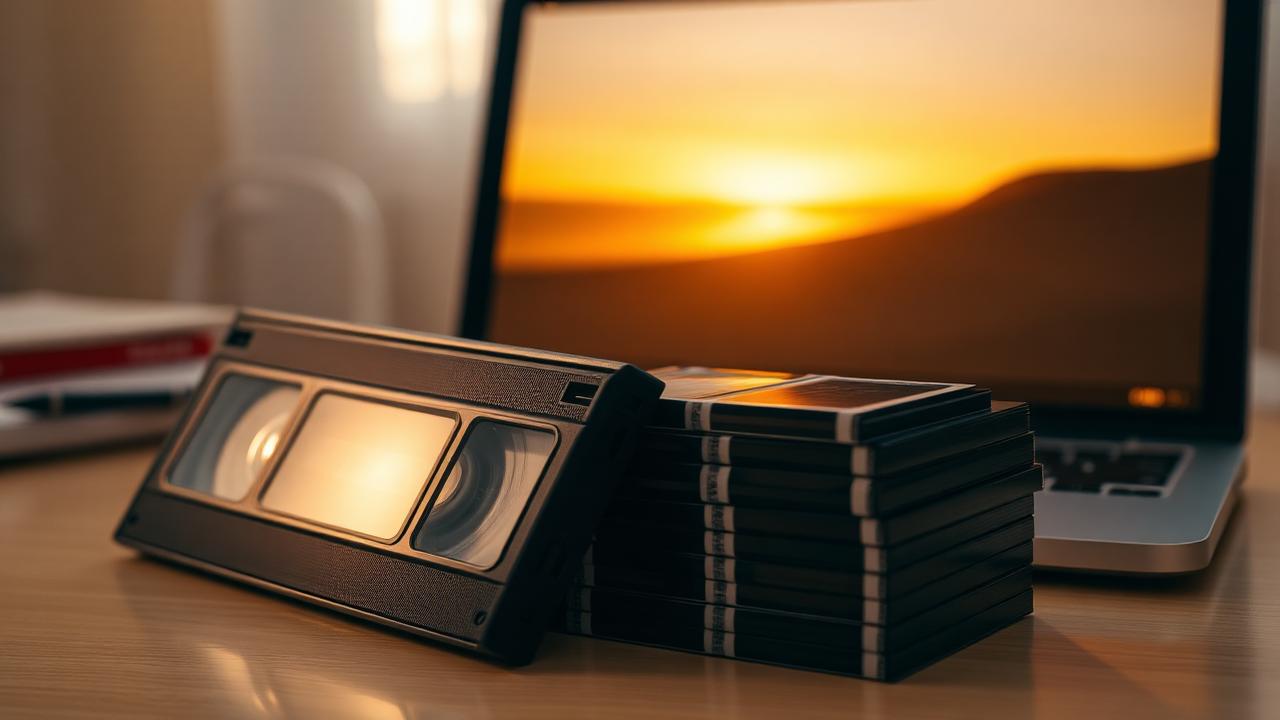
Full-size video cassettes, roughly the size of a hardback book. The tape inside is the same as their smaller cousins.
VHS-C, Video8, Hi8, MiniDV
The smaller camcorder tapes. VHS-C is a stubby VHS look-alike. Video8 and Hi8 are the size of an audio cassette. MiniDV is smaller again, roughly the size of a matchbox, and often looks nearly digital.
Audio cassettes
The classic C60 / C90 tapes. Family recordings on cassette are surprisingly common — birthdays, church services, and old radio programmes.
8mm and Super 8 cine film
Small reels of physical film, usually in a round metal or plastic tin. Silent unless there's a magnetic stripe along the edge.
Trusted with family archives
Umberdosh Restoration
If you're not sure what you've got, send us a photo of the box and we'll tell you before you commit to anything.
Related guides across the whole Help hub: What to do with a parent's photos and papers after they move into care, Cleared the house, kept the box: what to do with inherited family photographs, You don't have to sort it all at once — a calm guide to inherited family archives, Grandma's boxes: where to start when you don't know what's inside, How to protect family photos and documents after a bereavement, without rushing, Found a box of old family photos while clearing a house — now what?, VHS to digital: DIY vs professional — an honest comparison, How much does it cost to digitise old family photos in the UK?, Can you still get VHS tapes played? Here's what's actually happening to old tape, 35mm slides in the loft: are they still worth saving?, What actually happens to a VHS tape's picture quality over time, Why acid-free sleeves matter more than people think, How archivists actually store family photographs (and how you can too), The mistakes that damage old photographs faster than time does, Should you ever throw away 'duplicate' family photos? An archivist's view, What museums do differently when handling old paper and photographs, How to start researching your family history from a single box of documents, What can a photograph actually tell a genealogist?, Common family stories that turn out to be (partly) true, How to research one specific family mystery without committing to a full family tree, The best gift for a parent who has everything: their own history, restored, A Christmas gift that isn't a thing: digitising a lifetime of family photos, How to split family photographs between siblings without falling out, What to keep and what to let go: deciding without regret, JPEG or TIFF? Choosing the right file format for scanned photographs, How long do digital files actually last? Backups explained simply, Scanning photos with your phone vs a flatbed: what you actually lose, Storing photographs in a damp British house: what actually works, Looking after 8mm and Super 8 cine film before it's digitised, Why the framed photos on your wall are fading faster than the ones in the box, How to date an undated photograph from clothing, cars and card stock, Recording the stories before they're lost: interviewing older relatives, A golden anniversary gift: their wedding album, restored and shareable