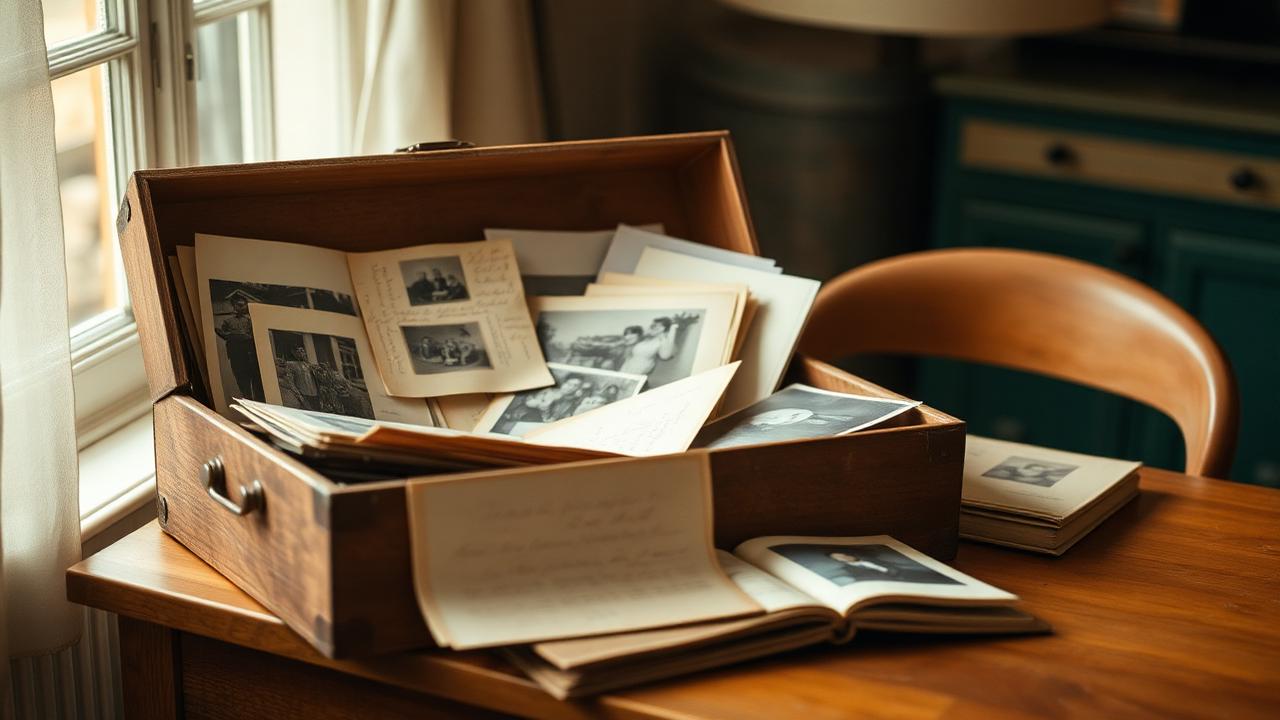
In the weeks after a bereavement, family photographs often move from a house that was warm and lived-in to a garage, a loft, or the boot of a car. Any one of those is worse for a photograph than staying put.
Nothing in a box of photographs is urgent. Grief is. So the aim of the first few months is not to organise anything — it is simply to stop the collection getting worse while you deal with everything else.
A checklist for the first month
You are trying to answer one question: is this collection stable? That means:
• Inside the house, not in an outbuilding.
• Away from radiators, sunny windowsills, and damp walls.
• In a rigid box with a lid, ideally cardboard, never a sealed plastic tub.
• Not in the same box as anything that could leak — old batteries, pens, cosmetics.
• Lifted off the floor, even by a couple of inches, in case of a leak or a washing machine flood.
Why a sealed plastic tub is the classic mistake
Plastic tubs feel protective, and for books or crockery they are. For photographs they trap whatever moisture was in the room when you sealed the lid. Prints and negatives then sit in their own microclimate, and in a cold garage that condenses onto the emulsion. The result is the milky bloom and stuck-together prints we see most often in the studio.
A cardboard box breathes. If you want a tub, leave the lid loosely resting rather than clipped down, and keep it indoors.
Deal with the fragile things first, not the interesting things
It is natural to reach for the wedding album. In terms of risk, the things that need attention first are the ones actively damaging themselves: photographs stuck to broken glass in frames, sticky 'magnetic' albums from the 1970s and 80s, anything smelling of vinegar (that is acetate film decaying), and paper that has been wet at any point.
You don't need to fix any of it. Separate those items into their own box, keep them flat, and note what you found. That single act buys you years.
Photograph the paperwork before anything is split up
Probate, house clearance and family sharing all tend to disperse a collection. Before that happens, take quick phone photos of anything with writing on it — the backs of prints, the fronts of envelopes, the inside covers of albums. Names and dates are the part that becomes irreplaceable, and they are usually lost long before the images are.
Don't feel obliged to look through everything with visitors
Well-meaning family will offer to 'help sort it out.' You are absolutely allowed to say the collection is stable, thank you, and you'll do it in your own time.
If relatives want copies, that is a genuinely good reason to have the collection digitised once, properly, rather than posting originals around the country. Prints that travel rarely all come home.
When you are ready — and not before
Most people we work with come to us somewhere between six months and three years after a death. There is no correct timing. When you do feel ready, the collection you carefully left alone will still be there in the state you left it, which is the entire point of the first month's work.