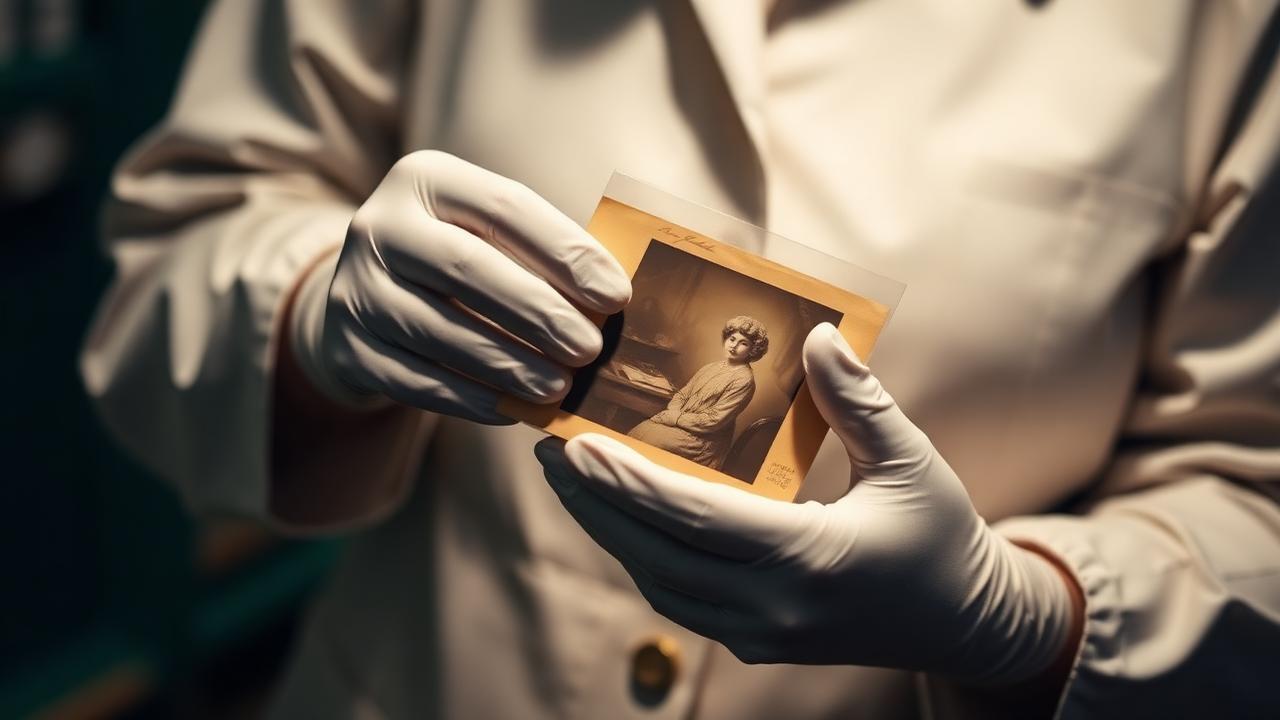
What museums do differently when handling old paper and photographs
You don't need a museum's budget to use museum habits. Here are the small things conservators do that make a big difference.
5 min read
Most of the difference between museum practice and home practice is procedure, not equipment.
Clean, dry hands (not gloves)
For most family photographs, freshly-washed hands are better than cotton gloves — gloves reduce grip and cause tears. Nitrile gloves are used for very old or fragile items, but not for a family album from the 1970s.
One item on the desk at a time
The single biggest cause of damage in a domestic sort-through is items sliding off the pile. Museum practice is one item out, one item back.
Never leaning on the item
It sounds obvious, but a hand resting on the corner of a photograph while you look at another one is how prints crease.
Pencils only
Pens are banned near collections. Even in cataloguing, pencil.
Digital-first
Modern archives scan first and then work from the scans. Physical originals are only handled when they have to be. It's the single biggest reason old collections in museums last longer than the same items would at home.
Trusted with family archives
Umberdosh Restoration
Working from scans is exactly the archival trick we let you use at home — once we've digitised your collection, you never have to handle the originals to enjoy them.
Related guides across the whole Help hub: What to do with a parent's photos and papers after they move into care, Cleared the house, kept the box: what to do with inherited family photographs, You don't have to sort it all at once — a calm guide to inherited family archives, Grandma's boxes: where to start when you don't know what's inside, How to protect family photos and documents after a bereavement, without rushing, Found a box of old family photos while clearing a house — now what?, VHS to digital: DIY vs professional — an honest comparison, How much does it cost to digitise old family photos in the UK?, Can you still get VHS tapes played? Here's what's actually happening to old tape, 35mm slides in the loft: are they still worth saving?, What actually happens to a VHS tape's picture quality over time, Cine film, slides, cassettes: a plain-English guide to what you might find in an old box, Why acid-free sleeves matter more than people think, How archivists actually store family photographs (and how you can too), The mistakes that damage old photographs faster than time does, Should you ever throw away 'duplicate' family photos? An archivist's view, How to start researching your family history from a single box of documents, What can a photograph actually tell a genealogist?, Common family stories that turn out to be (partly) true, How to research one specific family mystery without committing to a full family tree, The best gift for a parent who has everything: their own history, restored, A Christmas gift that isn't a thing: digitising a lifetime of family photos, How to split family photographs between siblings without falling out, What to keep and what to let go: deciding without regret, JPEG or TIFF? Choosing the right file format for scanned photographs, How long do digital files actually last? Backups explained simply, Scanning photos with your phone vs a flatbed: what you actually lose, Storing photographs in a damp British house: what actually works, Looking after 8mm and Super 8 cine film before it's digitised, Why the framed photos on your wall are fading faster than the ones in the box, How to date an undated photograph from clothing, cars and card stock, Recording the stories before they're lost: interviewing older relatives, A golden anniversary gift: their wedding album, restored and shareable